
Capacity building: Beyond the plan, the true measure of organizational resilience
For a long time, organizational resilience was approached mainly from a documentary perspective: emergency plans, continuity plans, procedures, neatly organized binders, and periodic audits.
However, climate, health, and cyber crises, as well as the transformation of current global geopolitics, have highlighted an uncomfortable reality: having a plan does not mean being prepared.
The real question is no longer “Do we have a plan?” but rather “Are we capable of acting effectively when the situation deteriorates?”
This is precisely where the concept of capability comes in.
What is capability, in concrete terms?
Capability refers to an organization’s actual, operational ability to deal with a disruptive event, make relevant decisions under pressure, and mobilize its resources in a coherent and coordinated manner.
It is based on a key principle
Capacity is not declarative, it is demonstrated. Unlike a purely normative or documentary approach, capacity building focuses on what the organization can actually do, here and now, with the people present, the tools available, and the context of the moment.
In particular, it covers:
- Understanding roles and responsibilities;
- Mastery of decision-making processes;
- The ability to produce a reliable situational assessment;
- The ability to communicate effectively;
- The rapid mobilization of human and material resources;
- Interdepartmental and inter-partner coordination.
In other words, capacity building is the transition from plan to controlled action.
Why plans are no longer enough
A plan is a static asset. A crisis is a dynamic system.
In operational reality:
- The people planned for are not always available;
- Events evolve faster than expected;
- Scenarios never unfold exactly as they do on paper;
- Decisions must be made with incomplete information.
A well-established plan that is not integrated into daily practices creates an illusion of security. It reassures governance, but exposes the organization at the critical moment.
Capacity building, on the other hand, aims to answer a simple but demanding question: “If this happens tomorrow morning, are we capable of managing it?”
How to measure capacity building
Measuring capacity building is a strategic issue, because you can only improve what you are able to observe and evaluate.
Moving from a compliance-based approach to an evidence-based approach
Measurement is not based on intentions or statements, but on observable evidence:
- Exercises carried out;
- Decisions made in a simulated context;
- Response times measured;
- Coherent sequences of actions;
- Communications produced and disseminated.
The question is not “Is it planned?”, but “Is it under control?”.
Assessing by capacity pillars
An effective approach is to structure measurement around capacity pillars, for example:
- Governance and leadership in crisis situations;
- Situational awareness and impact management;
- Decision-making processes;
- Operational coordination;
- Internal and external communication;
- Resource management;
- Business continuity;
- Interoperability with partners.
Each pillar is assessed using concrete, weighted indicators that remain stable over time, allowing for progressive assessment.
Measure over time, not just once
Capacity building is never a one-time thing. It needs to be measured over time, using a comparison approach:
- T0: initial status;
- T-1: change since the last measurement.
This approach lets you track real progress and objectively assess investments in resilience.
How to maintain capacity building over time
Maintaining capacity is often more complex than acquiring it. It requires a structured and continuous approach. It is essential to integrate capacity into the organization’s daily operations.
Capacity should not only be expressed during annual exercises. It must be:
- Integrated into operational tools;
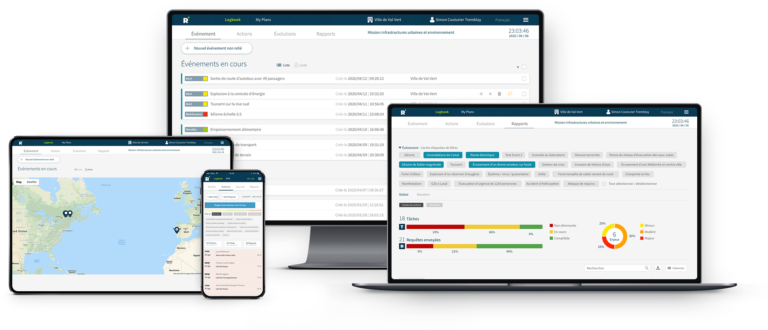
- Visible in dashboards;
- Understandable by managers;
- Aligned with resilience governance objectives.
When a manager perceives the state of their organization’s capacity as a true management indicator, resilience becomes a management issue, not a one-off project.
Use exercises as a maintenance tool, not as an end in themselves
Exercises are not demonstrations of compliance; they are learning tools.
An effective exercise:
- Introduces uncertainty;
- Generates domino effects;
- Forces trade-offs;
- Reveals areas of fragility.
The value lies not in the scenario, but in how the organization responds to the unexpected.
Capitalize on feedback
Every exercise, every real event, every near-miss is an opportunity for improvement. But it is still necessary to:
- Structure feedback;
- Link it to assessed capabilities;
- Adjust practices, not just documents.
It is this cycle of continuous improvement that transforms capability into a sustainable organizational advantage.
Capability building: a strategic governance lever
When mature, capability building becomes:
- A decision-making tool for management;
- An indicator of confidence for stakeholders;
- A differentiating factor in risk management;
- A credible foundation for organizational resilience.
It allows us to move beyond the sterile debate between compliance and operations and enter into a logic of performance in degraded situations.
In conclusion
Resilience cannot be decreed. It must be demonstrated, measured, and maintained. This is referred to as a resilient mindset.
In a world marked by uncertainty, building capacity is no longer a luxury or an option. It is a strategic skill, just like an organization’s financial performance or cybersecurity.
The organizations that understand this will not be those that avoid crises, but those that know how to navigate them with clarity, control, and credibility.
And that starts with accepting a simple truth: a plan is necessary, but it is never enough.
Be SMART Resilient!